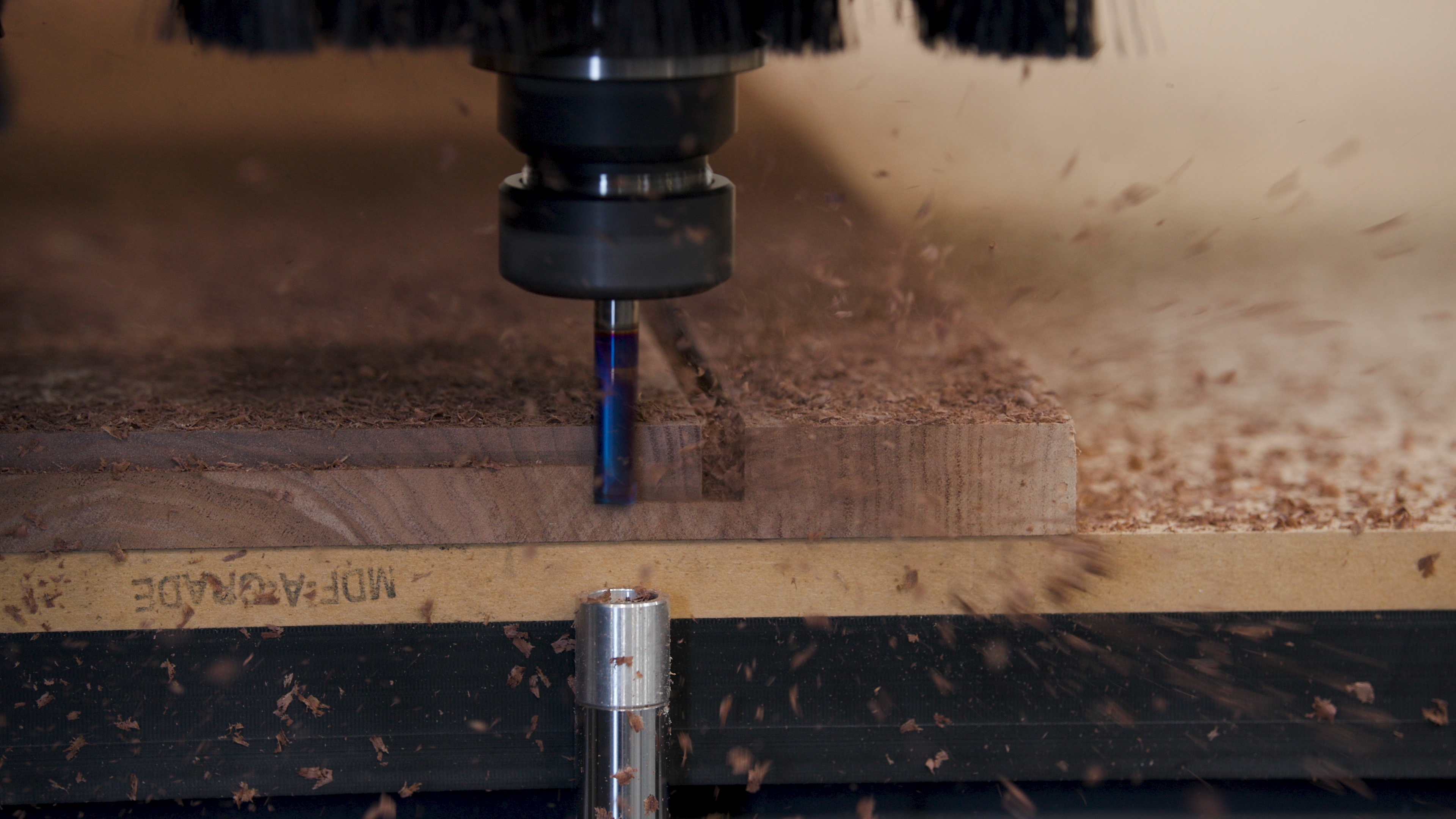

Acrylic is not a forgiving material. Push the feed rate too slow or the spindle speed too low, and the edge melts and gums up instead of cutting clean. That means the CNC router or machining center you buy for acrylic work matters as much as the bit you put in it. Vacuum hold-down, spindle range, chip evacuation, and frame rigidity all affect whether you get a polished edge or a scrapped sheet.
This guide walks through eleven CNC machine vendors that show up consistently in acrylic and plastics fabrication shops across the US, what each one actually offers for acrylic work, and how to think through the decision.
Key Takeaways
- Acrylic machining puts specific demands on a CNC machine: vacuum or roller hold-down to keep sheets flat, spindle speeds generally in the 18,000+ RPM range, and enough chip evacuation to prevent melting.
- Vendors in this space range from small-shop routers built for a single operator to full industrial machining centers designed for continuous production.
- Several vendors, including Laguna Tools, ShopSabre, AXYZ, MultiCam, and C.R. Onsrud, publish acrylic-specific guidance or dedicated plastics product lines, which is a good sign of real experience with the material rather than a general-purpose machine that happens to also cut plastic.
- The right vendor depends on sheet size, production volume, and whether acrylic is your main material or one of several you run through the same machine.
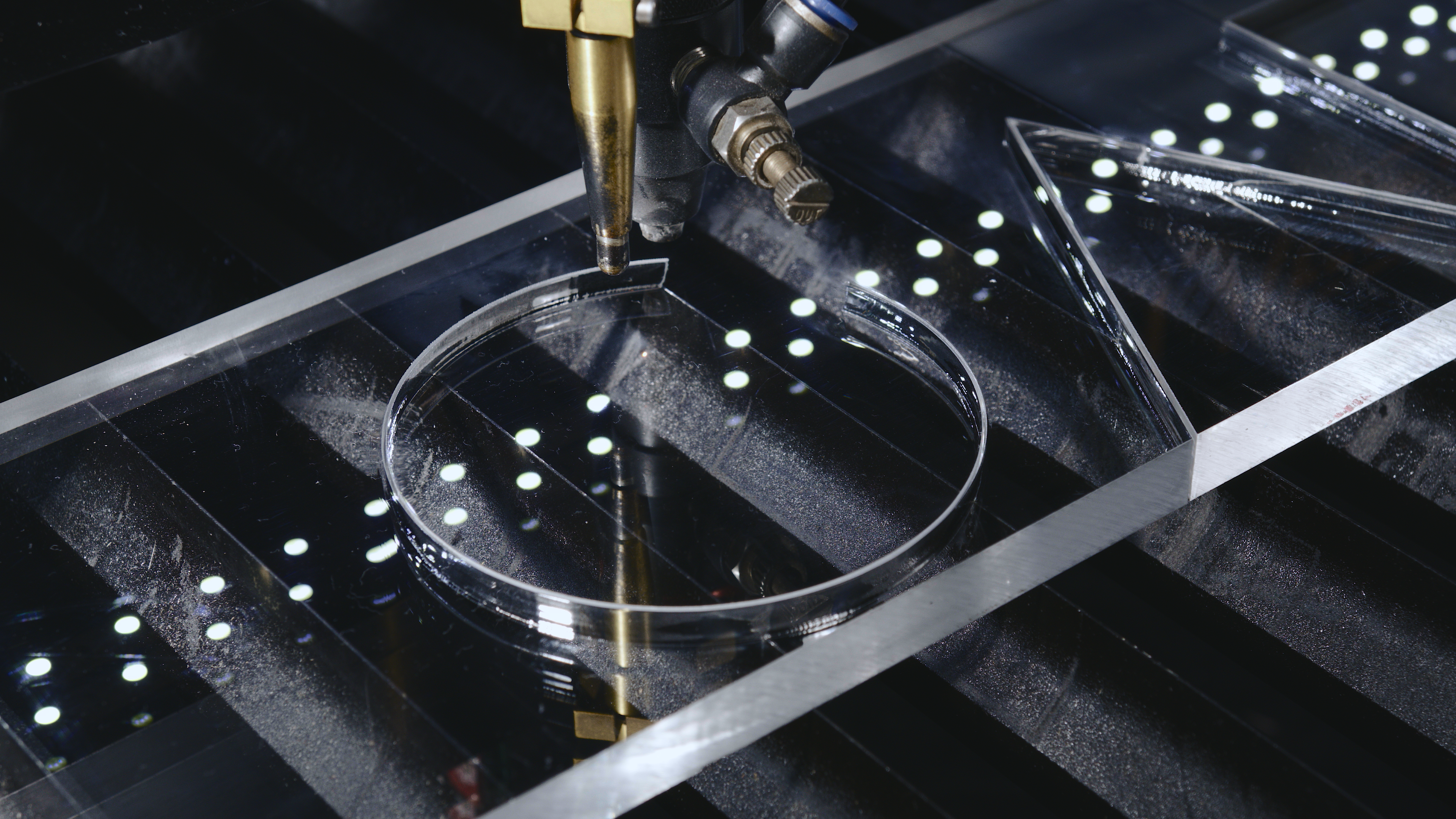
Best CNC Machine Vendors for Acrylic Machining in the US
1. Laguna Tools
Overview
Laguna Tools started in 1983 as an importer of European woodworking machinery and has since built out its own CNC line covering desktop routers through industrial production machines, based in Grand Prairie, Texas.
CNC machines or router options
SmartShop is Laguna's core CNC machining center lineup, built for industrial production use. The Swift Series is a separate line that shares many components with SmartShop, available with a standard table or with a 4- to 6-zone vacuum phenolic table depending on size (4'x4', 4'x8', or 5'x10'). Laguna recommends the SmartShop® Series for acrylic work, since most models come standard with multi-tool or automatic tool-change style abilities.
Acrylic/plastic machining capabilities
Laguna publishes specific acrylic machining guidance: the Swift's liquid-cooled electrospindle runs 6,000 to 24,000 RPM, and Laguna recommends at least 18,000 RPM with a 75 to 300 IPM feed rate for clean acrylic edges without melting. The vacuum table is built to hold thin or large acrylic sheets flat during the cut.
Key features to consider
- Liquid-cooled 3 HP electrospindle, 6,000 to 24,000 RPM
- Multiple table sizes with matching vacuum zone counts
- Optional 4th axis turner and multi-tool head for mixed material work
- Lifetime factory support and on-site training included with purchase
Pros and cons
Because SmartShop and Swift share components, a shop can start on a Swift and move up to SmartShop's industrial machining centers without switching brands or software. The Swift line specifically, which Laguna recommends for acrylic, tops out at 5'x10', so a shop needing a larger single-sheet work area would look at SmartShop's larger configurations or a dedicated industrial vendor.
Best-fit buyer
Shops that need one CNC platform to handle acrylic alongside wood, foam, and aluminum, and that don't need a table larger than 5'x10'.
2. ShopSabre
Overview
ShopSabre has manufactured CNC routers, plasma tables, and fiber laser systems out of Lakeville, Minnesota since 1999.
CNC machines or router options
The lineup runs from the entry-level RC Series and 23 Series up to the industrial IS-A and PRO Series, with HSD spindles ranging from 4 HP manual-change units to 10-13 HP with a 12-position automatic tool changer.
Acrylic/plastic machining capabilities
ShopSabre lists acrylic and plastic explicitly in its materials list across the RC, 23, and IS-A Series. Its HiFlow vacuum technology is designed to increase table surface flow, which matters for holding thin acrylic sheets flat, and the machined phenolic tabletop with digital vacuum zone control is standard on the IS-A line.
Key features to consider
- HiFlow vacuum tables milled at the factory for tighter seal
- Multi-zone digital vacuum control on industrial models
- HSD spindle options from 4 HP to 13 HP
- Optional auto tool changer and pusher bar for production workflows
Pros and cons
The vacuum and spindle options scale well from a first CNC purchase to a multi-shift production floor, and the RC and 23 Series are aimed at shops buying their first machine. The 13 HP, full-ATC configurations on the IS-A line represent a significant step up in cost and complexity from the entry Series, so a buyer should be clear on which tier actually matches current volume.
Best-fit buyer
Shops that want to start smaller and grow into a heavier vacuum and spindle configuration without changing vendors.
3. AXYZ
Overview
AXYZ began in 1990 repairing other brands' CNC routers before building its own starting in 1994, headquartered in Ontario with US operations in Tallmadge, Ohio.
CNC machines or router options
The Infinite Series is AXYZ's configurable router line, with spindle options from 5 HP to 15 HP, plus tangential and oscillating knife heads for materials that need creasing or soft-good cutting.
Acrylic/plastic machining capabilities
AXYZ publishes dedicated guidance on plastics fabrication, including the point that heat is the primary risk when cutting acrylic, since excess heat causes gumming and cloudy edges. Every Infinite Series machine ships with a standard vacuum deck configured for high-pressure hold-down, and AXYZ documents both pump- and blower-based vacuum options depending on whether the material is porous.
Key features to consider
- Standard vacuum deck on every Infinite Series machine
- Spindle range from 5 HP to 15 HP
- Helical rack and pinion transmission for reduced heat buildup at the cut
- Dedicated technical content on plastics-specific tooling and feed rates
Pros and cons
AXYZ's plastics-specific documentation suggests real depth on acrylic and plastic fabrication rather than a generic materials list. Because the Infinite Series is built around configurability, buyers need to work through more options at quote stage than with a fixed-configuration machine.
Best-fit buyer
Plastics fabricators who want a machine configured specifically around their sheet sizes and production mix rather than a standard off-the-shelf spec.
4. MultiCam
Overview
MultiCam started in Dallas in 1989 and has grown into a manufacturer covering router, laser, plasma, and waterjet cutting on one platform.
CNC machines or router options
The Apex1R and Apex3R Evo are MultiCam's standard-size routers, with the 5000 Series stepping up to larger, heavier-duty production machines.
Acrylic/plastic machining capabilities
MultiCam markets acrylic, ABS, Lexan, HDPE, PVC, PETG, and UHMW machining directly, and the Apex3R Evo is specifically noted for mirror-edge finish capability on acrylic and aluminum. MultiCam also supplies its own line of plastics-specific router bits designed for both hard plastics (cast acrylic, PVC) and soft plastics (extruded acrylic, ABS).
Key features to consider
- Mirror-edge finish capability on the Apex3R Evo
- Cut speeds up to 1,950 IPM depending on model
- Dedicated plastics tooling line matched to hard vs. soft plastic types
- Automatic spindle and knife tool pickup on the Apex1R
Pros and cons
MultiCam's own tooling division and published edge-finish claims point to plastics as a core use case rather than an afterthought. The Apex1R is positioned as an entry point on price, so a shop planning to run acrylic at high volume should compare it against the Apex3R Evo or 5000 Series before assuming the base model covers long-term needs.
Best-fit buyer
Shops that want acrylic and aluminum finished to a mirror edge without a secondary polishing step.
5. ShopBot Tools
Overview
ShopBot has built CNC routers out of Durham, North Carolina since 1996, with a mission of making CNC accessible to smaller shops, schools, and makers.
CNC machines or router options
The Desktop and Desktop MAX lines cover smaller-format work, with the PRSalpha available for larger sheet sizes up to 4'x8'.
Acrylic/plastic machining capabilities
ShopBot's own tutorials cover engraving and cutting acrylic directly, and its Desktop MAX offers a Universal Vacuum Hold Down Deck option built around a plywood plenum and MDF spoil board for sheet goods. Spindle speeds on ShopBot's smaller machines run in the 6,000 to 18,000 RPM range.
Key features to consider
- Vacuum hold-down deck kit available on Desktop and Desktop MAX
- Free ShopBot Control Software included with every machine
- Step resolution of .0005" or better on standard models
- Extensive published tutorials specific to acrylic cutting and engraving
Pros and cons
The lower cost of entry and included software make ShopBot a common first CNC router for smaller shops and schools. Its standard work envelope tops out smaller than industrial vacuum-table machines from other vendors on this list, so a shop planning to run full 5'x10' sheets regularly would need to look at ShopBot's larger custom configurations.
Best-fit buyer
Smaller shops, schools, and makers running acrylic projects that fit within a 4'x8' or smaller work area.
6. Techno CNC Systems
Overview
Techno CNC Systems has manufactured CNC routers, plasma cutters, and laser cutters since 1986, based in Ronkonkoma, New York.
CNC machines or router options
The Atlas Series and Titan Series are Techno's standard router lines, with the HDS and Venture Plus series built for higher-throughput nested-based production.
Acrylic/plastic machining capabilities
Techno lists cast and extruded acrylic, along with a long list of other plastics (PVC, HDPE, UHMW, Lexan, Sintra), across its materials specifications. The Atlas Series ships standard with a 4 HP HSD spindle running 6,000 to 18,000 RPM, and Techno's multi-zone vacuum tables use a phenolic surface connected to a 10 HP rotary vane pump.
Key features to consider
- 4 HP HSD spindle standard on the Atlas Series, programmable 6,000-18,000 RPM
- Multi-zone phenolic vacuum table with pop-up material alignment pins
- Materials list explicitly covers a wide range of acrylic and plastic types
- On-site and online training included
Pros and cons
Techno's long materials list and published customer use cases in plastics fabrication (including automotive dashboard and instrument panel work) show established plastics experience. Techno markets its machines specifically on affordability, which means a buyer comparing specs should confirm which spindle and vacuum options are standard versus added cost for their specific plastics application.
Best-fit buyer
Sign shops, cabinet shops, and plastics fabricators looking for a full-featured router without stepping up to the highest industrial price tier.
7. Thermwood
Overview
Founded in 1969 in Dale, Indiana, Thermwood is one of the oldest manufacturers of 3- and 5-axis CNC routers in the US.
CNC machines or router options
Thermwood's 3-axis Model 43 and 45 are built for plastic sheet and panel processing, while the 5-axis Model 67 and 90 handle trimming of thermoformed plastic parts, molds, and composites.
Acrylic/plastic machining capabilities
Thermwood publishes tooling recommendations specific to the plastics industry, listing acrylic alongside HDPE, polycarbonate, and several other plastics as materials its machines regularly process. Thermwood's control software can nest output files from multiple design programs directly at the machine, which matters for sheet utilization on higher-value materials like acrylic.
Key features to consider
- Dedicated 3-axis models built specifically for plastic sheet and panel work
- 5-axis models for trimming thermoformed plastic parts and molds
- Published tooling guidance by material and application (trimming vs. finishing)
- Nesting handled directly at the machine control
Pros and cons
Thermwood's decades of focus on plastics sheet processing and thermoformed part trimming give it depth in applications beyond flat-sheet cutting. That same industrial focus means Thermwood's machines are generally sized and priced for production environments rather than a single-operator shop's first CNC purchase.
Best-fit buyer
Manufacturers trimming thermoformed acrylic or plastic parts, molds, or patterns, not just cutting flat sheet stock.
8. C.R. Onsrud
Overview
C.R. Onsrud has built CNC machinery in Troutman, North Carolina since 1976, with roots in the Onsrud family's router and spindle manufacturing dating back to 1915.
CNC machines or router options
The A-Series covers compact industrial routers from 4'x4' to 5'x12' tables, while the Q-Series (5-axis) and RH-Series (roller hold-down) are built for higher-complexity or higher-volume plastics work.
Acrylic/plastic machining capabilities
C.R. Onsrud lists acrylics, polyethylene, polypropylene, PVC, and polycarbonate directly among its processed materials. The RH-Series uses roller hold-down in addition to vacuum, which is built specifically for parts too small or too warped to hold with vacuum alone, and the company also sells Onsrud-branded router bits engineered for acrylic and other machinable plastics.
Key features to consider
- Roller hold-down option (RH-Series) alongside standard vacuum tables
- 5-axis Q-Series for thermoformed plastic and composite trimming
- Onsrud-branded plastics router bit line available separately
- All manufacturing handled at the company's Troutman, NC factory
Pros and cons
The combination of roller and vacuum hold-down options gives C.R. Onsrud flexibility for warped or small acrylic parts that pure vacuum tables struggle with. Its product line is oriented toward industrial and production environments, so smaller shops evaluating a first CNC purchase will find more entry-level options elsewhere on this list.
Best-fit buyer
Production shops processing full sheets of plastic, including parts too small or irregular for vacuum hold-down alone.
9. Anderson America
Overview
Anderson America has operated its US sales and support arm out of the Charlotte, North Carolina area since 1991, backed by a parent company with a longer history in industrial CNC routers.
CNC machines or router options
The Spectrum-M Series is Anderson's entry industrial router, while the EXXACT and EXXCEL Series step up to moving-table 3- and 4-axis machining centers, and the Maxxis Series covers 5-axis work.
Acrylic/plastic machining capabilities
Anderson America markets its routers specifically for plastic milling, describing engineered vacuum processes and tooling recommendations for holding small parts and achieving clean finishes. The Maxxis 5-axis line is built to handle thicker plastics alongside aluminum and composites.
Key features to consider
- FANUC control and electronics standard across the lineup
- Spectrum-M Series positioned as a lower-cost entry point sharing components with larger models
- Maxxis Series rated for thicker plastic and composite material
- Dedicated process guidance for vacuum and tooling on small plastic parts
Pros and cons
Sharing spindle, rack, and control components across the Spectrum-M and premium lines means a shop can start on the entry model with a known upgrade path. Anderson's product literature leans heavily on cabinetry and aluminum applications, so a buyer focused specifically on acrylic should confirm current vacuum and tooling configurations directly with Anderson for their material and part size.
Best-fit buyer
Shops running plastics alongside cabinetry, aluminum, or composite work on the same machine.
10. Industrial CNC
Overview
Industrial CNC has manufactured CNC router systems since the mid-1990s, based in Alamosa, Colorado, and built its reputation on offering industrial-grade routers at a lower price point than many competitors.
CNC machines or router options
The Pro Series is Industrial CNC's core line, available in multiple table sizes with a standard 12" gantry clearance.
Acrylic/plastic machining capabilities
Industrial CNC lists acrylics directly among the materials its Pro Series is designed to cut, alongside wood, aluminum, and solid surface materials. The Pro Series ships with a T-slotted hold-down as standard, with a liquid-cooled variable-speed spindle and dust collection attachment included.
Key features to consider
- Standard T-slotted hold-down included on Pro Series machines
- Liquid-cooled, variable-speed spindle standard
- Four-motor dual-driven drive system across all axes
- Positioned specifically around affordability for shops buying their first industrial-grade CNC
Pros and cons
The standard-equipment approach (spindle, dust collection, hold-down all included rather than optional) simplifies the buying decision for a first-time CNC buyer. Because the standard hold-down is T-slot rather than vacuum, shops planning to run thin or large acrylic sheets regularly should ask about vacuum table options before ordering.
Best-fit buyer
Shops buying their first industrial-grade CNC router and looking to keep the initial configuration straightforward.
11. Biesse
Overview
Biesse is an Italian machinery manufacturer founded in 1969, with its Rover line of CNC machining centers used across furniture, construction, and industrial manufacturing worldwide.
CNC machines or router options
The Rover Plast series is Biesse's line built specifically for advanced materials, including the Rover Plast A FT for aluminum, foam, acrylic, and composites, and the Rover Plast K FT for solid surface and technical plastics.
Acrylic/plastic machining capabilities
Biesse markets the Rover Plast A FT specifically for cutting and engraving acrylic components, with vacuum-based workholding and dust and chip extraction systems designed for the cleanup demands of technical materials. The Rover S FT and related nesting models are built for combined wood, plastic, and nonferrous material processing at production scale.
Key features to consider
- Rover Plast line built specifically around acrylic, composites, and foam
- Configurable 3-, 4-, and 5-axis machining depending on model
- Vacuum-based workholding standard on nesting and Plast configurations
- B_NEST software plugin for nesting-based production
Pros and cons
A machine line built specifically for acrylic and advanced materials, rather than a general woodworking router adapted to plastics, is a meaningful distinction for shops running acrylic at scale. Biesse's machining centers are priced and scaled for high-volume industrial production, so a smaller shop evaluating its first CNC router would likely find better fit earlier on this list.
Best-fit buyer
Manufacturers running acrylic, composites, or solid surface materials at industrial production volumes.
How to Choose the Best CNC Machine Vendor for Acrylic Machining
Start with sheet size and hold-down. Acrylic sheets, especially thin ones, need consistent vacuum or roller pressure across the whole surface, so confirm the vendor's table matches the sheet sizes you actually run rather than a generic "up to" spec.
Check the spindle range against acrylic's requirements. Most vendors on this list recommend spindle speeds in the 18,000 RPM-plus range specifically to avoid melting acrylic edges, so a machine that tops out lower may need a spindle upgrade before it is ready for acrylic work.
Ask how the vendor handles chip and heat management. Acrylic gums up quickly if heat isn't carried away from the cut, so dust and chip extraction, coolant options, and recommended feed rates are worth asking about directly rather than assuming any router handles it the same way.
Match the machine's production intent to your volume. Some vendors on this list build specifically for single-operator shops buying a first CNC router, while others are built around continuous industrial production; buying more machine than you need adds cost, and buying less can mean outgrowing it quickly.
Confirm tooling and software support. A vendor that publishes acrylic-specific tooling recommendations or sells matched router bits, like several vendors above, has likely already solved problems a shop would otherwise run into through trial and error.
Benefits of CNC Machining for Acrylic Projects
CNC cutting gives acrylic parts repeatable accuracy that hand-cutting or manual routing cannot match, which matters when a project calls for dozens or hundreds of identical parts. It also allows for detailed engraving, 3D relief work, and clean internal cutouts that would be difficult to achieve with a table saw or hand router. Because acrylic is a relatively expensive sheet material compared to wood, the nesting software most CNC routers use to lay out parts efficiently on a sheet directly reduces material waste and cost per part.
Common Acrylic CNC Machining Applications
Acrylic CNC machining shows up across signage and point-of-purchase displays, where clarity and clean edges matter for a finished look; architectural and retail fixtures, including shelving and display cases; machine guards and safety shields; and prototyping for products that will eventually be produced in other materials but benefit from acrylic's low cost and machinability during development. It is also common in exhibit and trade show fabrication, where custom shapes and lettering need to be produced quickly and repeatably.
Acrylic CNC Machining FAQs
What is acrylic CNC service and how does it work?
Acrylic CNC service refers to using a computer-controlled router or machining center to cut, engrave, or shape acrylic sheet or block material. A design file drives the machine's spindle along a programmed path, with vacuum or mechanical hold-down keeping the material flat and secure during the cut.
What materials can be used for CNC acrylic projects?
Cast and extruded acrylic are the two main forms, and CNC routers built for plastics generally also handle related materials like polycarbonate, PETG, HDPE, PVC, and ABS, often on the same machine with a change in tooling and feed rate.
What is the typical turnaround time for acrylic CNC services?
Turnaround depends heavily on part complexity, quantity, and whether the shop is running the job on an in-house machine or through an outside CNC service. In-house CNC ownership generally shortens turnaround for repeat or urgent jobs since there is no queue behind other customers' work.
Which manufacturing process is best for acrylic prototyping?
CNC routing is generally well suited to acrylic prototyping because it produces finished parts directly from a design file without tooling costs, which makes it economical for one-off or small-batch parts compared to processes like injection molding that require an upfront mold investment.
Final Thoughts
There is no universal best CNC vendor for acrylic machining. A shop's answer depends on sheet size, production volume, and whether acrylic is the main material or one of several run through the same machine. Use the profiles above to narrow the field, then get a hands-on demo cutting your actual material before making a final decision.